Toilet Installation FAQ
Questions customers ask before booking this service.
These answers focus on toilet pans, cistern feeds, floor fixing, pan connectors, outlet set-out, leak-safe installation and when a simple replacement becomes drainage or renovation work. They also cover SANS 10252-2 drainage awareness, SANS 10252-1 water-supply checks, PIRB CoC boundaries, SABS-approved materials, 75 mm trap-seal protection, 600 kPa pressure awareness, pipe sleeves, hydraulic testing and repeated flush testing so customers understand why a professional toilet installation is more than placing a pan on the floor.
What must be checked before toilet installation?
Before installation, the plumber should check the waste outlet position, pan connector type, P-trap or S-trap layout, water supply valve, pressure behaviour, floor level, wall clearance, cistern position, drainage ventilation and whether the old connector can seal properly. These checks help prevent a new pan from being forced into the wrong position and reduce the risk of odour, rocking, leaks, weak flushing and CoC issues where fixed pipework is changed.
Can any toilet fit my existing outlet?
No. Toilet pans differ in outlet height, set-out distance, trap type, footprint, cistern shape and wall clearance. A toilet that fits one bathroom may sit too far from the wall, clash with tiles or strain the connector in another. The old outlet and new pan should be compared before drilling, sealing or discarding the original toilet, especially when an offset connector or pipework alteration may be needed.
Why does a new toilet smell?
A new toilet smell usually means the waste route is not gas-tight or the drainage system is not venting correctly. Common causes include a poorly seated pan connector, an open waste route, a damaged seal, trap-seal loss or a branch-line ventilation issue. A 75 mm deep reseal where applicable helps protect against sewer gas, while silicone around the base should not be used to hide a waste-seal problem.
Should the toilet base be sealed?
The base can be sealed after the toilet is stable, level, flushed and checked for leaks, but sealant should never be used to hide a plumbing fault. A proper installation relies on the pan connector or seal to manage waste and odour. The visible base seal is mainly a finishing and hygiene detail once the hidden plumbing has been tested.
Can an isolation valve be added?
Often yes. A quarter-turn angle valve is useful because it lets the toilet be isolated for future inlet-valve, cistern or supply-pipe repairs without shutting down the whole property. The valve should be SABS-approved or standards-conforming, remain reachable after installation and be checked for leaks under pressure before the pan is pushed fully into position.
Why does a toilet wobble after installation?
A toilet can wobble because the floor is uneven, the tiles are loose, the fixing holes are wrong, the pan is not seated correctly or the bolts have been over-tightened on an unstable surface. A professional check looks at the rear, front and side level before final fixing. Pulling the pan down with bolts can crack porcelain or tiles.
Can you replace just the cistern?
Sometimes, if the existing pan, bolt spacing, flush route and wall clearance match the replacement cistern. Many older toilets have parts that no longer match modern cistern designs, so a cistern-only replacement must be checked before buying parts. If the pan and cistern do not pair correctly, a complete toilet suite may be the better repair route.
What causes weak flush after installation?
Weak flush after installation can come from incorrect cistern water level, unsuitable flush-valve setup, blocked rim jets, poor pan design, a low-volume flush paired with an old drain route, or a developing branch-line restriction. The toilet should be flushed several times during testing, and the pan water movement should be observed before the job is closed.
Can toilet installation cause leaks below?
Yes. Leaks can happen at the pan connector, cistern bolts, inlet valve, angle valve, flexible connector or supply pipe. In multi-storey buildings, even a small leak can track through floors and ceilings before it becomes visible. That is why the installation should be tested during filling, flushing and standing time, not just checked once.
How long should a toilet be tested?
A toilet should be flushed several times and checked at the cistern, angle valve, inlet connection, pan connector, base and nearby ceiling or floor areas where leaks could travel. New or altered fixed water supply pipework may also need hydraulic pressure testing before sign-off. It is helpful to let the cistern stand briefly after filling so slow leaks at bolts, valves or connections can show.
Can a toilet be moved to a new position?
Yes, but moving a toilet is usually renovation plumbing rather than a simple installation. The soil-water route, pipe fall, floor access, ventilation, pipe sleeves, waterproofing, pressure supply and wall clearance all need to be planned. Significant changes to fixed drainage or water supply may require a PIRB Certificate of Compliance where applicable, especially for insurance, sectional-title or property-transfer purposes.
What photos help before installation?
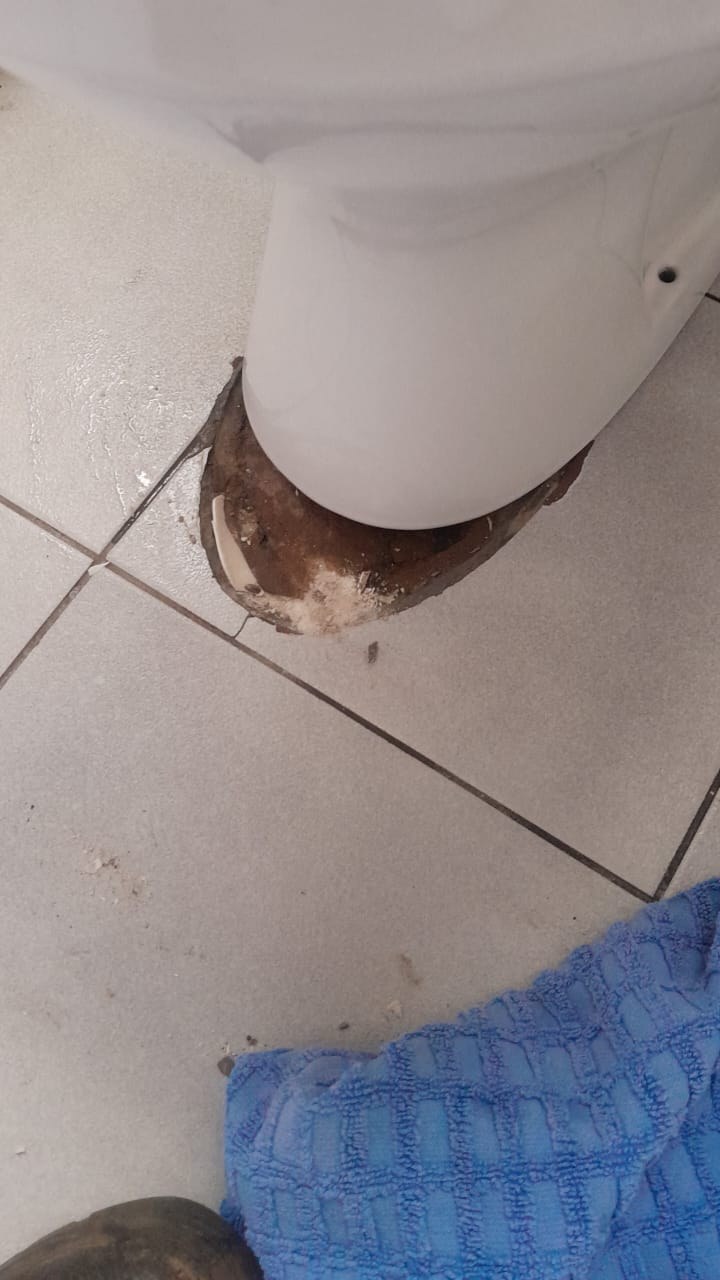
Helpful photos include the old toilet from the front, side and rear, the area behind the pan, the cistern supply valve, the floor around the base and any visible pipework. A tape-measure photo showing wall clearance or outlet position is also useful. These details help identify whether the job is likely to be a simple replacement or a more complex retrofit.
Can a wall-hung toilet be installed?
A wall-hung toilet can be installed only if the wall structure, frame support, concealed cistern, water supply and waste route are suitable. The frame must be fixed into a structure that can carry the load, and future access to valves and cistern parts must be planned. This is usually more involved than fitting a close-coupled toilet.
Is toilet installation urgent?
It becomes urgent when the existing toilet cannot be used, leaks at the base, smells strongly, rocks badly or affects sanitation in the home or business. If water is spreading, reduce use and keep the area clear. If the pan rises or drains slowly, the issue may need blocked toilet clearing before a replacement toilet is fitted.
Do new toilets use less water?
Many modern toilets use less water, especially dual-flush models, but the flush must still suit the pan and drain route. Older drainage layouts may not perform well if the flush volume is too low for the pipe run. The installation should balance water saving with reliable clearing so the customer does not trade lower water use for repeat blockages.