Plumbing-side checks
The plumbing inspection looks at isolation valves, pressure-control valves, vacuum breakers, safety discharge, drip tray drainage, copper connections, non-return valves and visible leaks around the geyser body or roof pipework.
Solar geyser repairs
Specialist repair support for open-loop and closed-loop solar geysers, glycol loops, controllers, pumps, valves, roof pipework, anodes and hot-water performance faults.
A solar geyser fault can look like a normal geyser problem, but the cause may sit in the collector, cylinder, circulation pump, controller, sensor, valves, heat-transfer fluid or pressure-control setup. The repair approach should follow the water path, the heat path and the control path before replacing parts blindly.
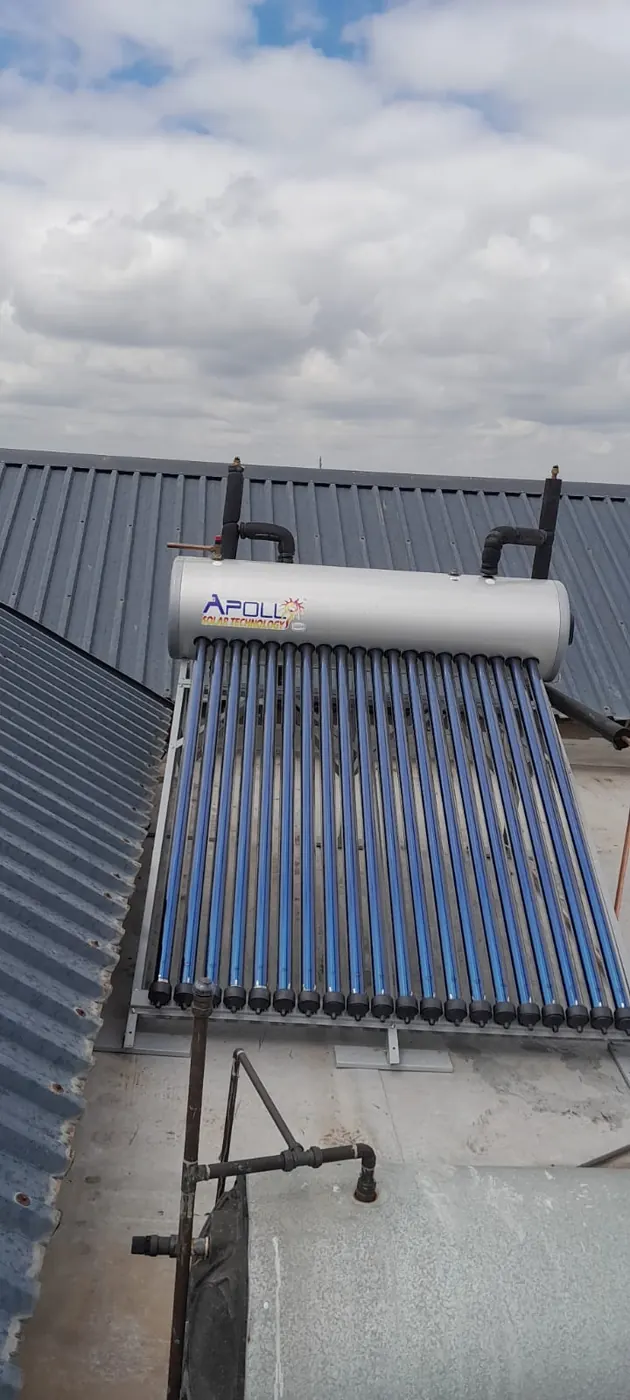
Solar geyser fault finding
Solar geyser systems combine normal geyser components with roof collectors, circulation pipework, pressure control, electrical backup and control parts. A fault should therefore not be treated as only a standard geyser call. The inspection should confirm whether the symptom is coming from the cylinder, collector, pump, controller, valve set, pressure behaviour, roof-side pipework or heat-transfer circuit.
The plumbing inspection looks at isolation valves, pressure-control valves, vacuum breakers, safety discharge, drip tray drainage, copper connections, non-return valves and visible leaks around the geyser body or roof pipework.
The solar inspection looks at the collectors, roof loop, circulation pump, controller display, temperature sensors, air release points, insulation, pipe support and whether heat is actually moving from the collector into the stored water.
Send photos of the geyser label, controller display, overflow pipe, roof collector, visible valves and the exact leak point if it is safe. This helps separate an urgent water leak from a circulation, pressure or control fault.
A real plumbing business, not a lead-generation shell
Plumb A Nator is presented as a working plumbing business, not a generic directory pretending every solar geyser problem has the same answer. When you contact us, we ask what happened, where the system is installed, whether the issue is urgent and what you can safely see. We then explain the likely call-out process and what must be checked on site before parts are replaced.
We use photos from actual solar geyser systems, valves, controllers, pumps, roof pipework and repair situations so customers can see the type of work being discussed.
We do not pretend every solar geyser leak is the same. The repair may be a valve, sensor, pump, pipe joint, controller, insulation issue, pressure fault or replacement decision.
Customers should know what was checked, what was repaired, what still needs monitoring and when compliance or replacement planning may apply.
Common solar geyser repairs
Each solar geyser repair needs a practical sequence: make the area safe, isolate the water or power where appropriate, confirm the likely source and explain whether the fix is a small component, a plumbing correction or a replacement decision.
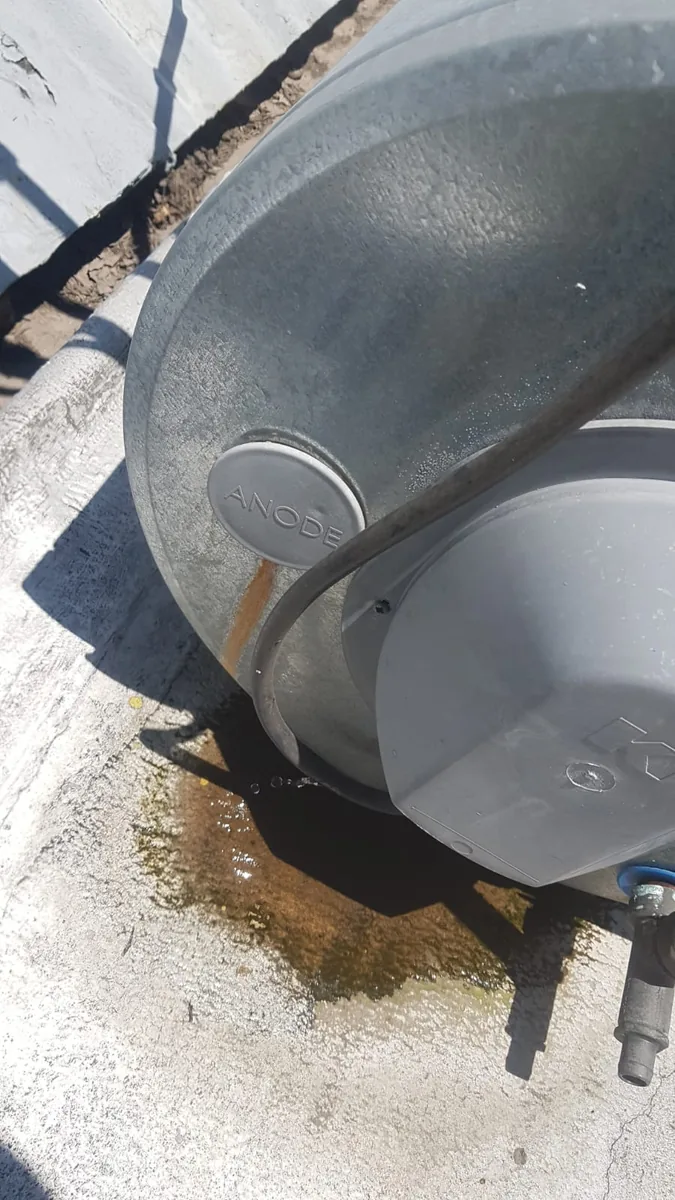
A cylinder leak may appear around the tray, ceiling, overflow or cylinder body. The repair path depends on whether the leak is from a valve, union, pipe connection or the cylinder itself.
What to look for: Water in the drip tray, ceiling marks, rust stains, damp insulation or a leak that restarts when the supply is opened.
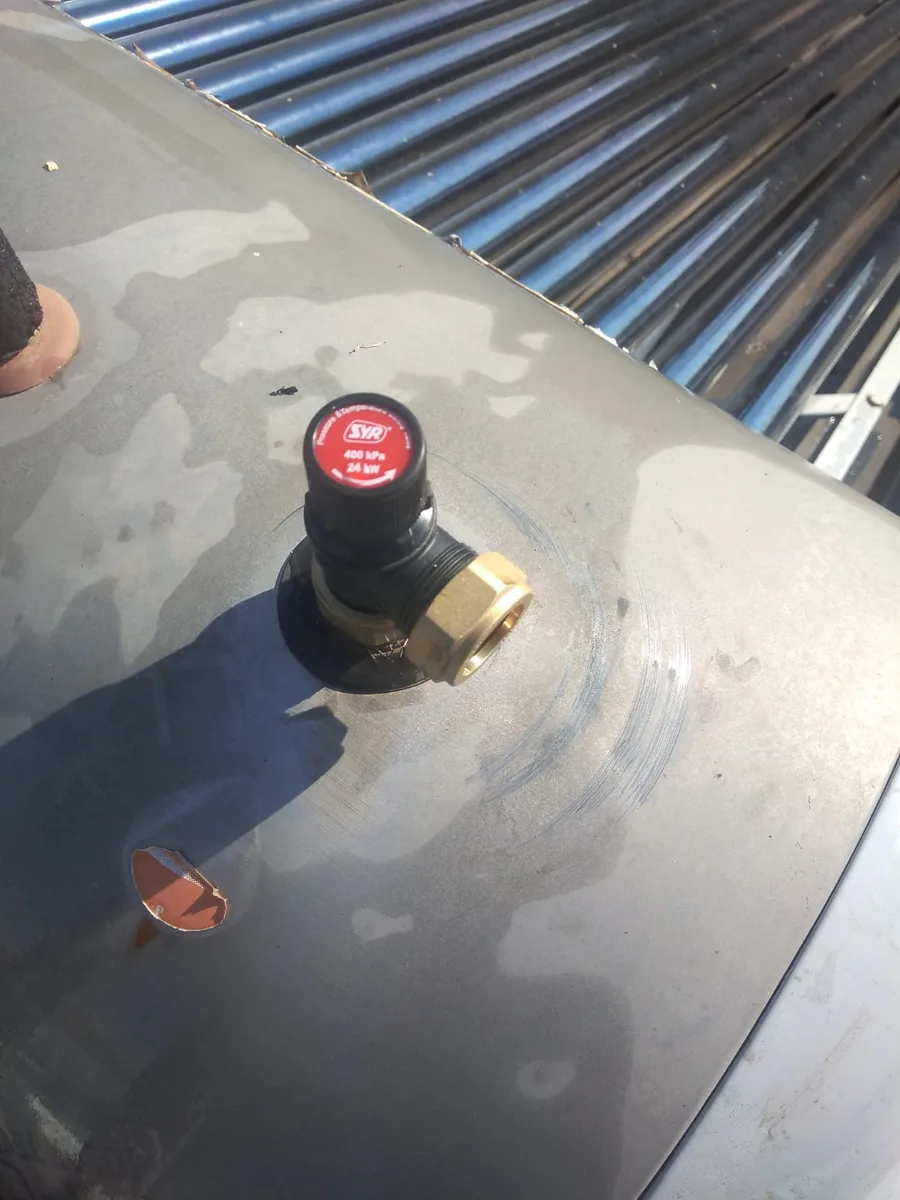
Safety valves, pressure valves and vacuum breakers protect the system. When these parts fail, the geyser may discharge water, lose pressure or become unsafe.
What to look for: Running overflow, valve chatter, water hammer, dripping pipework or hot-water performance that changes after pressure interruptions.
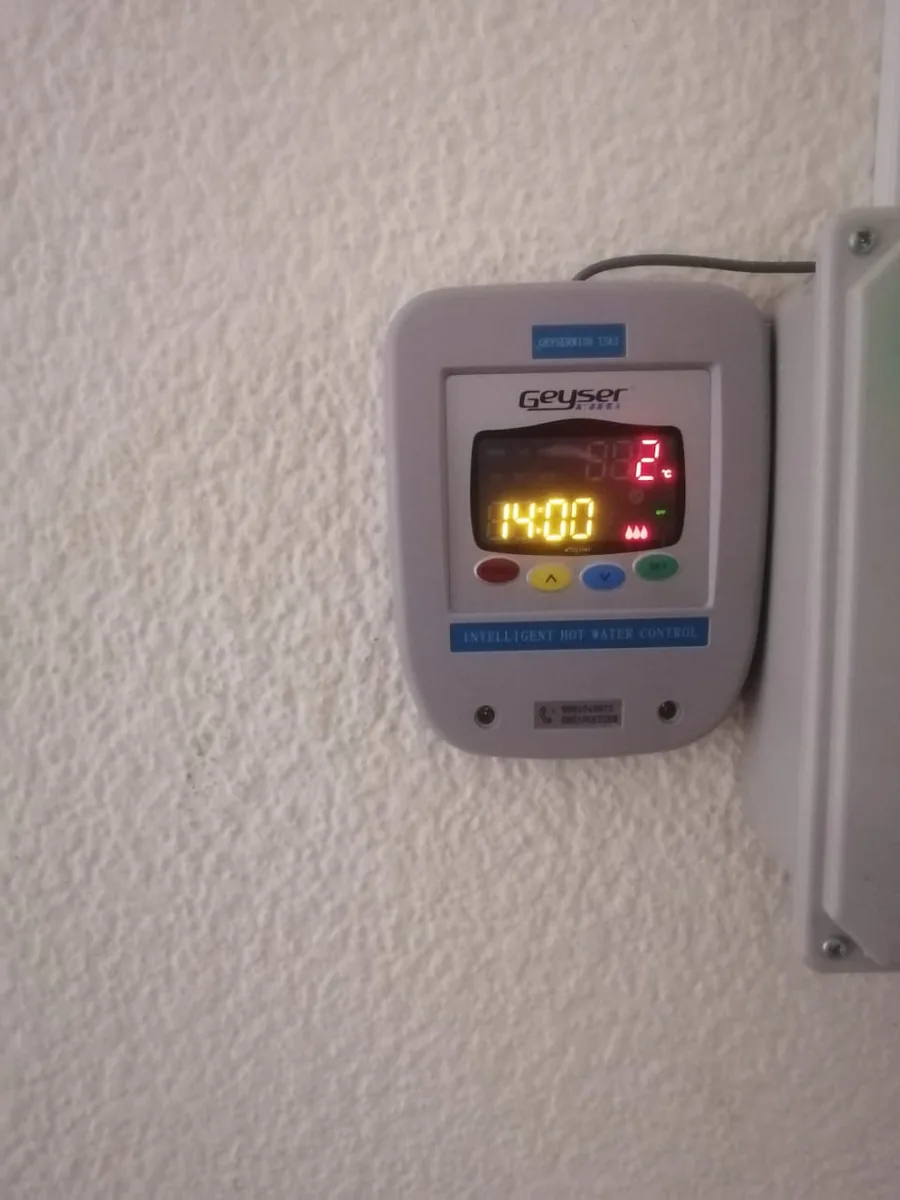
Split systems often rely on controls and circulation. A sensor, pump or controller issue can stop the roof collector from transferring heat properly.
What to look for: Error lights, pump noise, no circulation sound, cold water despite sun exposure or hot water only when electric backup is used.
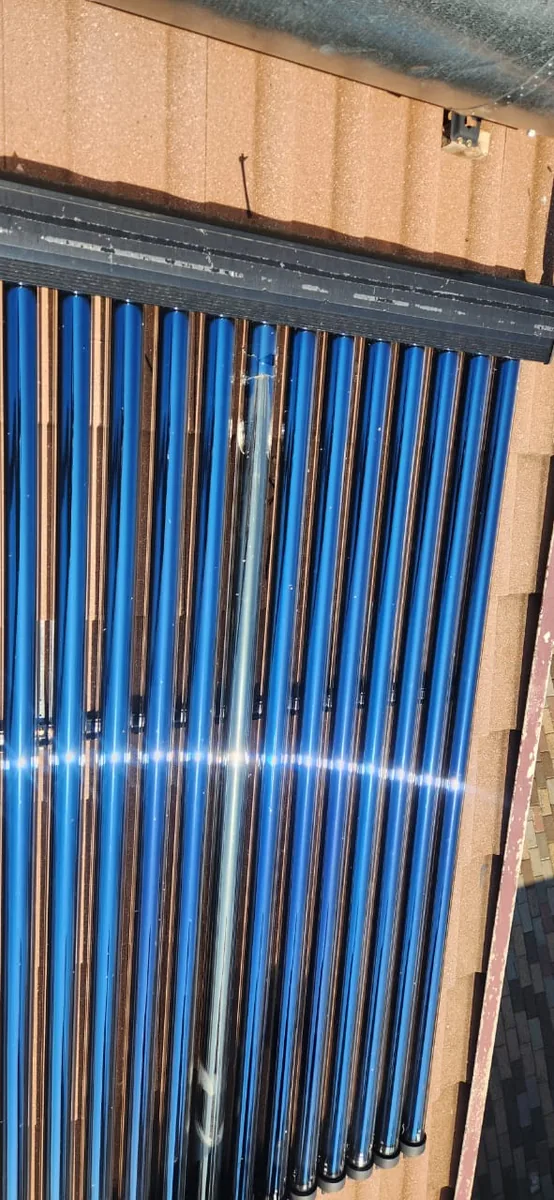
Roof-side leaks can come from collector fittings, copper joints, insulation damage or pipes moving in wind and heat. The repair should also check roof penetrations and support.
What to look for: Drips from roof pipes, wet fascia, stained walls, exposed insulation or water appearing only after the system heats up.
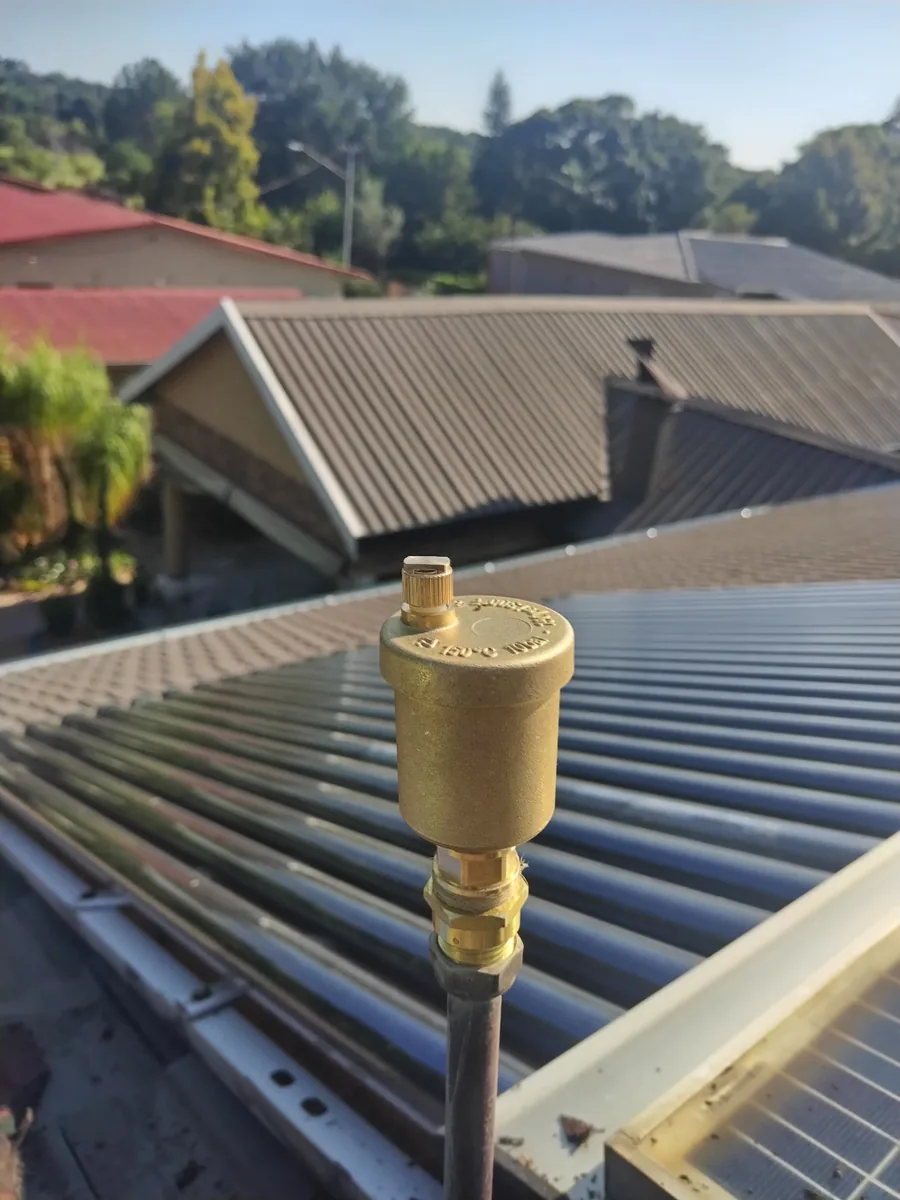
Pressure control and expansion behaviour affect solar geyser lifespan. Overheating or poor pressure control can shorten valve life and cause repeated discharge.
What to look for: Overflow after hot days, loud pipe noises, repeated safety-valve replacement or discharge after municipal supply interruptions.
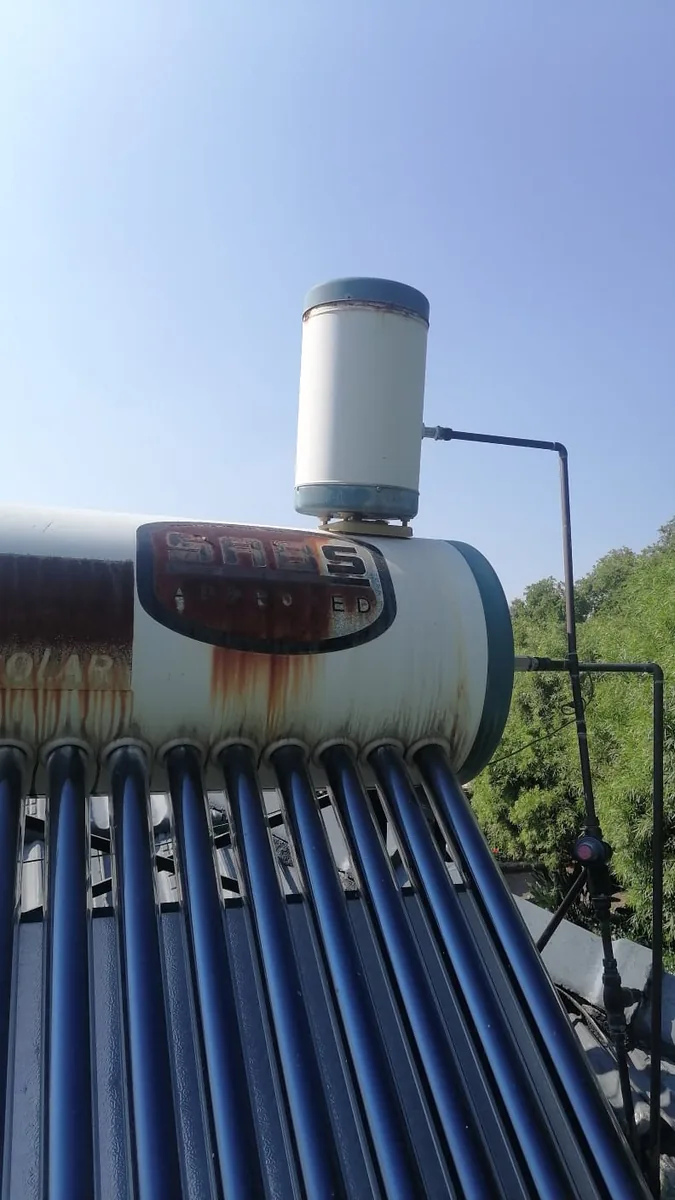
Not every solar geyser fault means the full system must be replaced. We compare age, fault type, cylinder condition, collector condition, parts availability and future serviceability.
What to look for: Repeat faults, old cylinders, corrosion, poor collector condition, expensive parts or an installation that is difficult to access safely.
Solar standards and specialist diagnosis
Solar hot-water repairs should not be handled as a quick parts swap. Solar systems work with roof collectors, high-temperature pipework, valves, pressure control, electrical backup and, on indirect systems, heat-transfer fluid. Our repair process is carried out with reference to the applicable requirements of SANS 10106 for solar water heating and SANS 10254 for fixed electric storage water heaters, with PIRB CoC guidance where qualifying regulated work is performed.
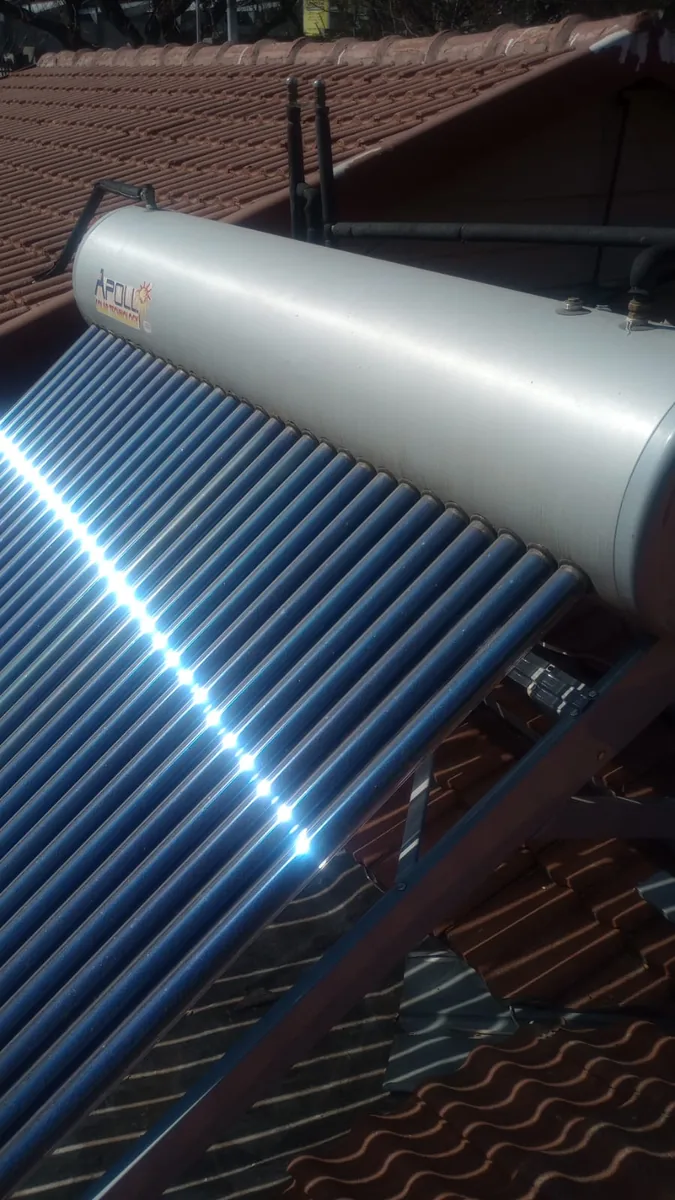
In a direct system, the household water moves through the solar collector and returns to the storage cylinder. Fault-finding must check the collector path, pipe insulation, vacuum breakers, non-return behaviour, valves, roof joints and whether the system is overheating or losing heat after sunset.
What to look for: Hot water that fades quickly, roof-side drips, collector pipe staining, noisy pipework, poor heating despite sun or overflow after very hot days.
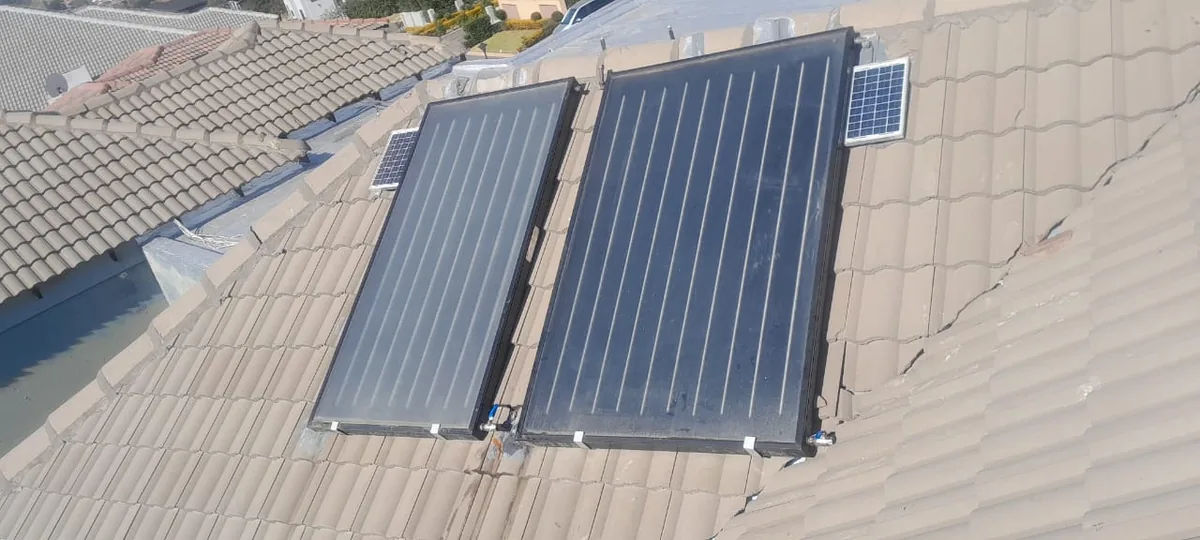
Indirect systems use a separate heat-transfer circuit, commonly with glycol or another approved solar heat-transfer fluid. These repairs need checks that a standard geyser call may miss: solar-loop pressure, pump function, air locks, fluid condition, heat exchanger performance and whether the closed loop is transferring heat properly.
What to look for: Controller faults, pump noise, poor solar gain, cold cylinder water despite sun, signs of fluid loss or a system that relies too heavily on electric backup.
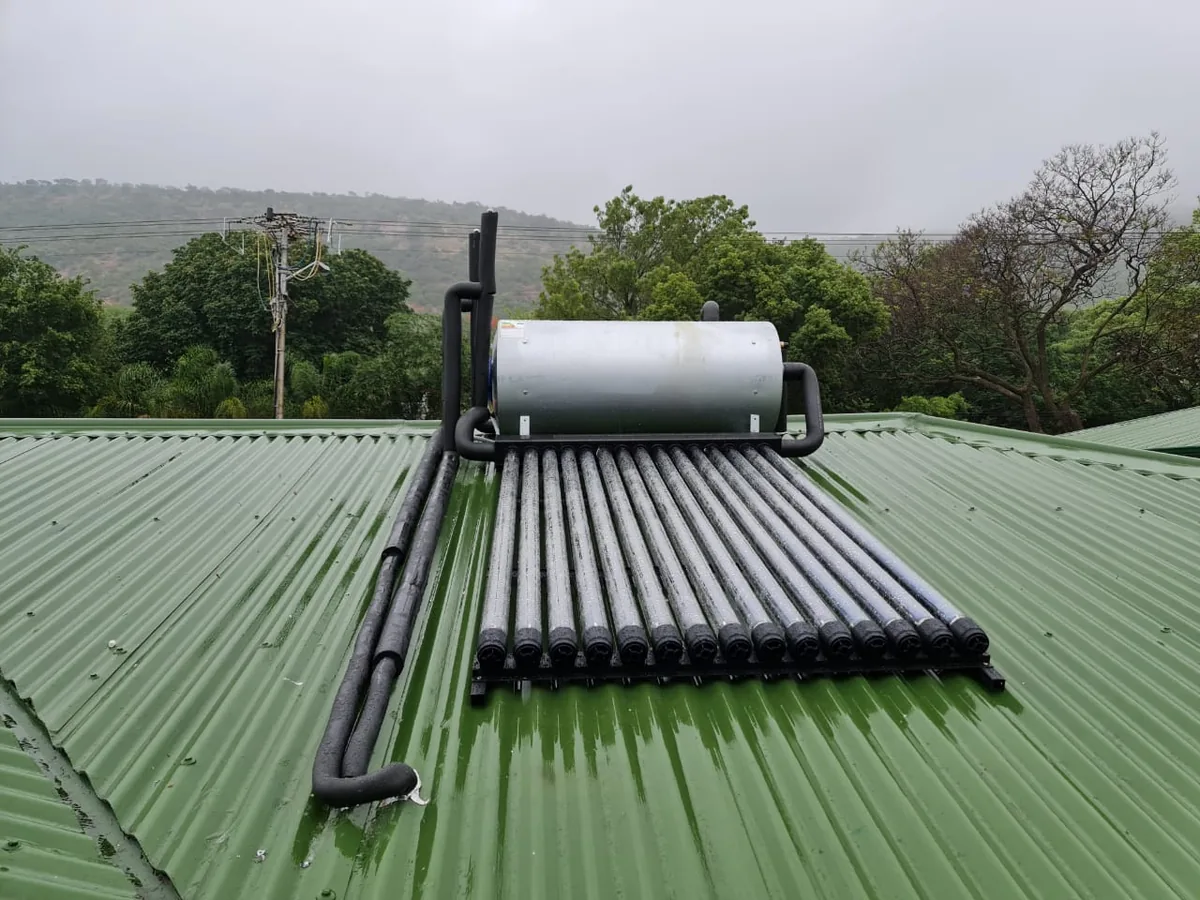
Where solar geyser work falls into regulated plumbing work, the correct PIRB Certificate of Compliance path matters for property records, insurers and future fault history. We explain which parts of the job are repair, which are replacement and when formal compliance documentation is required.
What to look for: Previous non-compliant repairs, missing discharge routing, unsafe valve layout, unsupported cylinder changes or roof work that may affect insurance.
Annual solar efficiency audit
A solar geyser is an investment, and many expensive failures start with small maintenance items that are easy to ignore. A proper solar repair visit should look at heat-transfer performance, tank protection, controller logic, circulation and high-temperature valve behaviour — not only whether hot water comes out of the tap today.
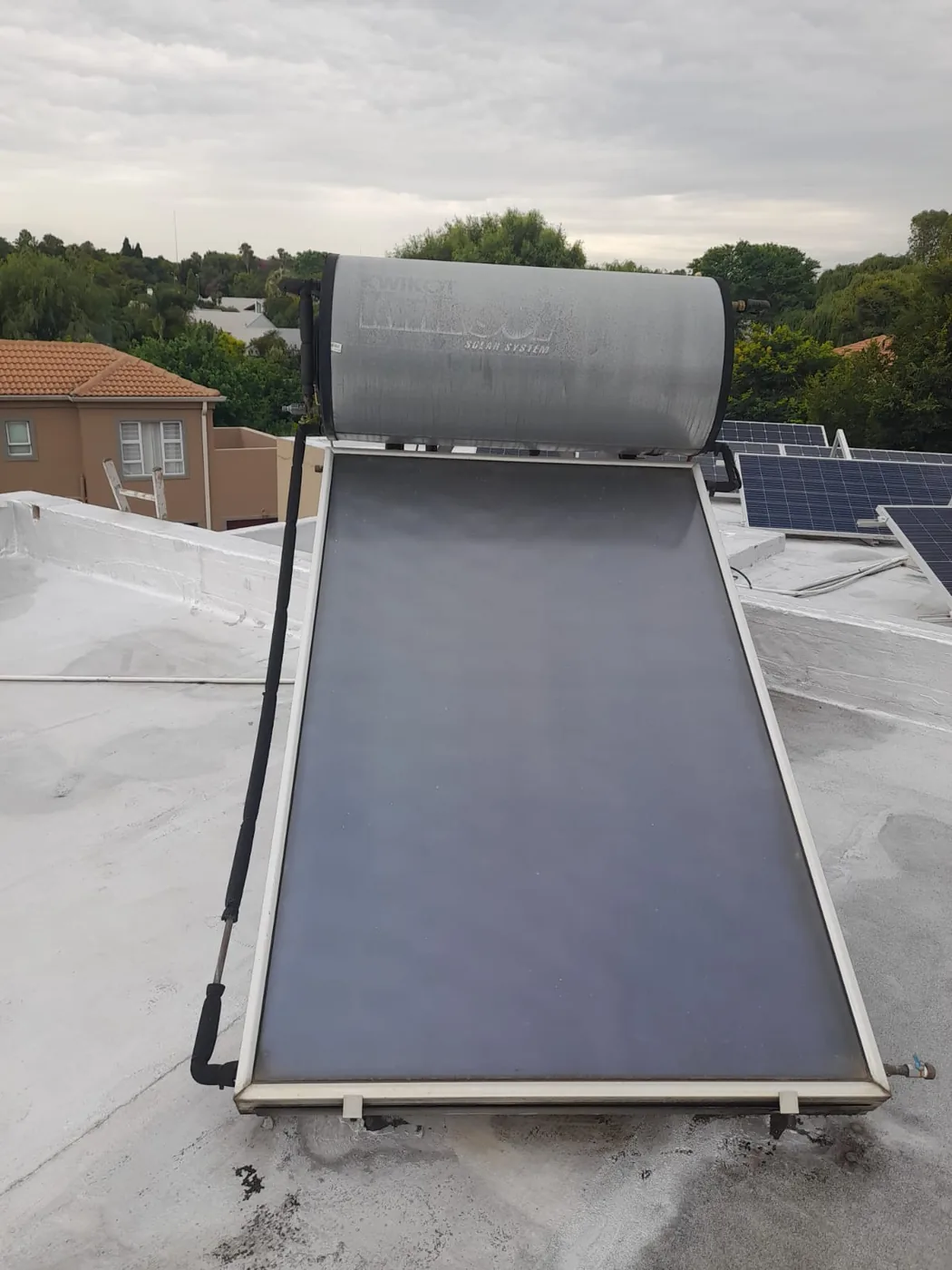
A solar geyser can look fine from the ground while slowly losing performance through weak circulation, old insulation, poor sensor readings, valve discharge, roof-side leaks or collector problems. An annual audit gives the owner a practical condition check before a small issue becomes a cylinder, ceiling or replacement problem.
Service value: We check visible components, heating behaviour, controller readings, pump/circulation clues, roof-side condition and maintenance planning so the customer understands what is urgent and what can be planned.
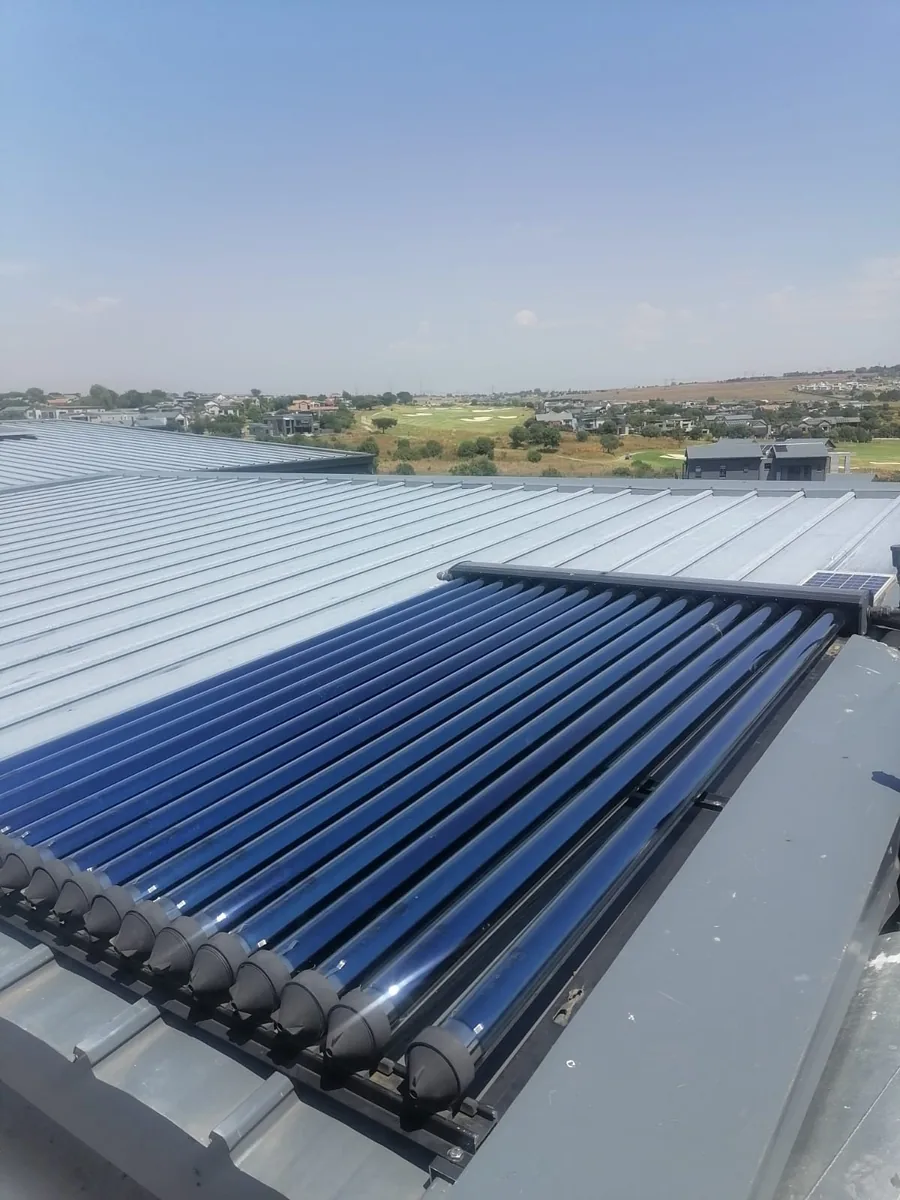
Closed-loop solar systems rely on heat-transfer fluid to carry heat from the collectors to the cylinder. If the glycol is weak, contaminated, low or aerated, the collector may become hot while the cylinder stays disappointing. We check the solar loop for pressure loss, trapped air, visible leaks and whether the fluid condition still supports reliable heat transfer.
Service value: A correctly maintained solar loop helps protect winter performance, reduces pump strain and prevents the customer from blaming the cylinder when the heat-transfer circuit is the real fault.
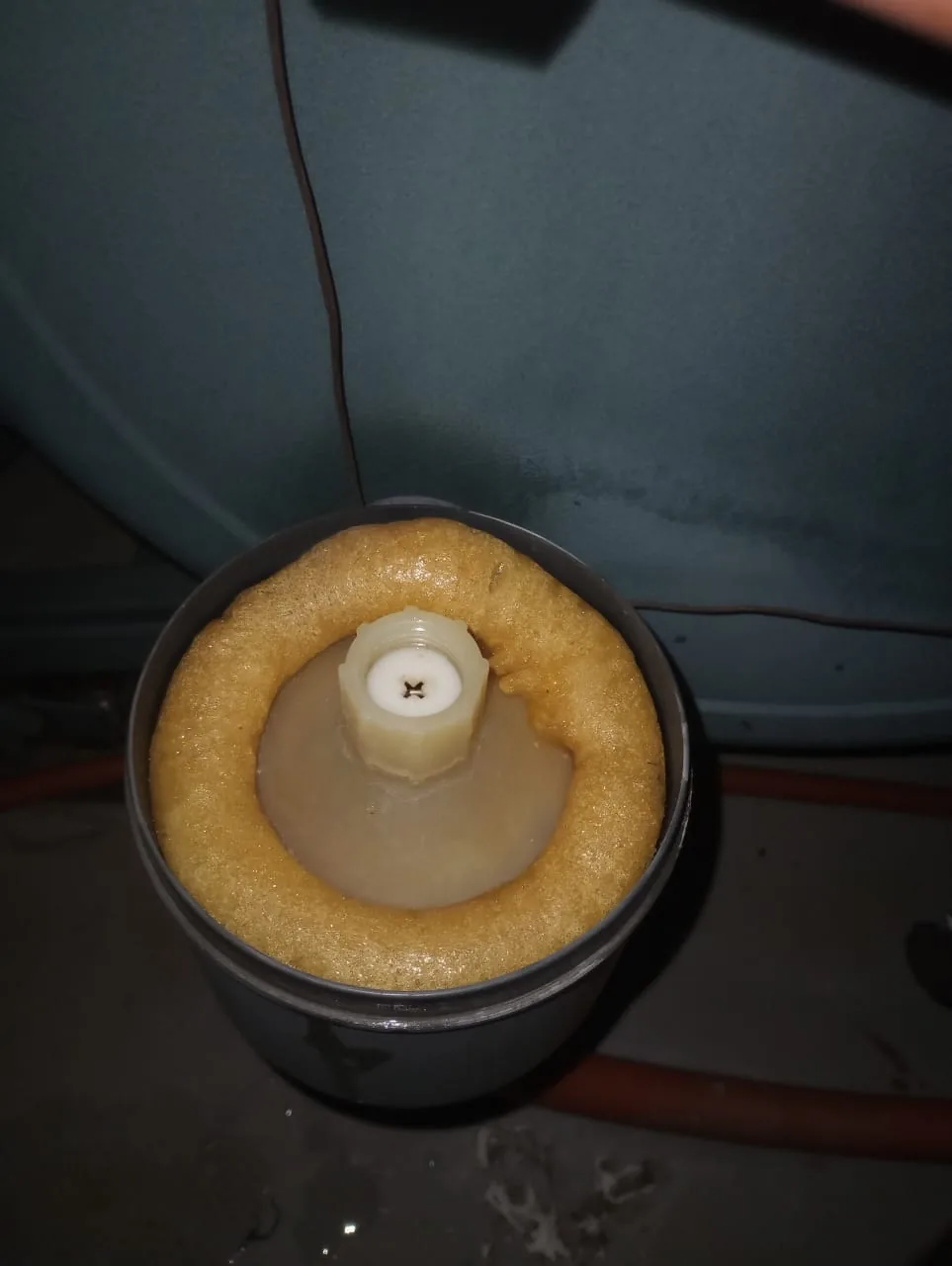
Solar cylinders are costly, and internal corrosion can shorten their life dramatically. The sacrificial anode is designed to corrode before the cylinder body does. During maintenance, the anode condition should be checked where access and system design allow, especially on older tanks, hard-water sites or systems with a history of rusty discharge.
Service value: Replacing a worn anode at the right time can help prevent premature tank failure and reduce the risk of a burst cylinder or rust-stained hot water.
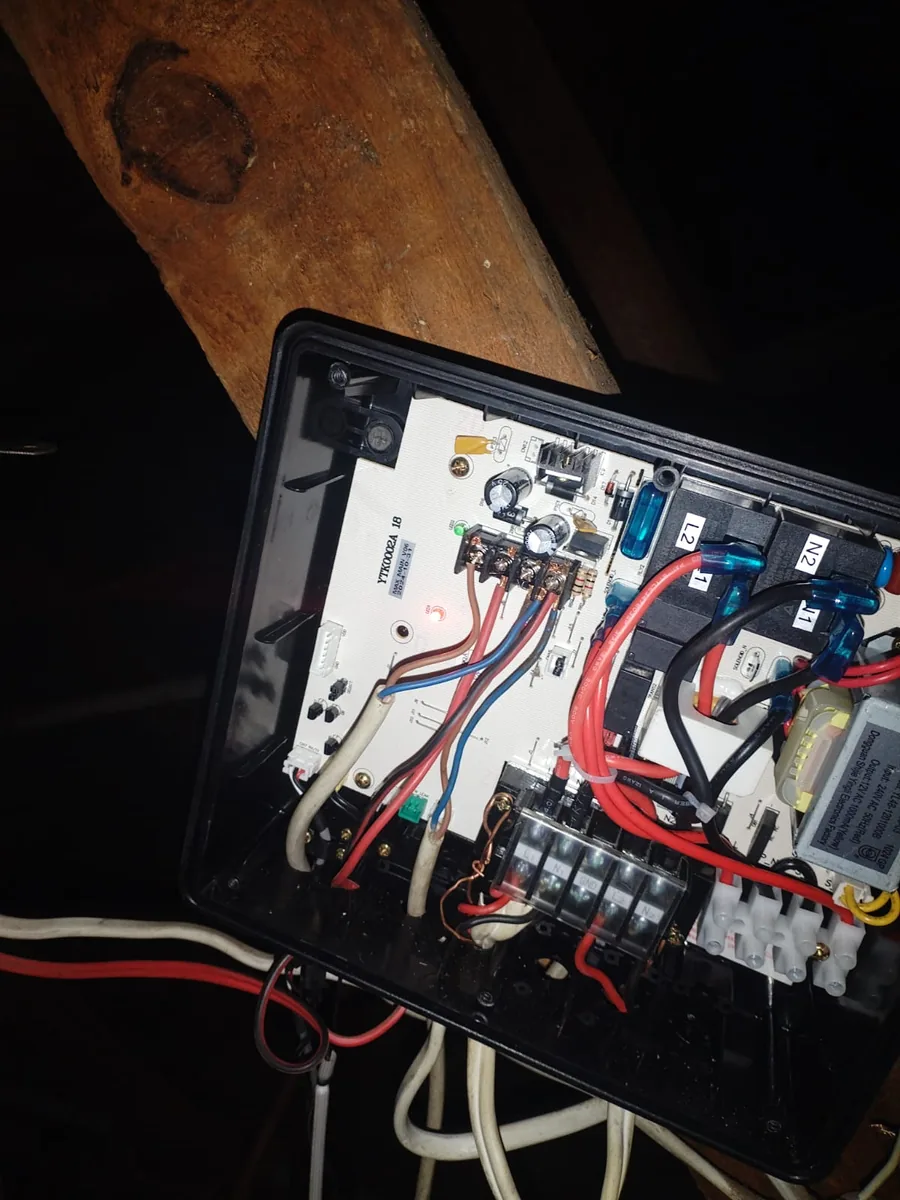
Many solar geyser “failures” are control failures. We check the controller display, sensor readings, pump behaviour, timer settings, backup heating logic and differential temperature settings. On Geyserwise-type controllers, fault codes such as E1, E3, E4 or E9 can point toward element, sensor, heating-loss or pump/circulation concerns that need targeted testing.
Service value: Correct controller diagnosis prevents unnecessary cylinder replacement and helps restore the balance between solar heating and electric backup.
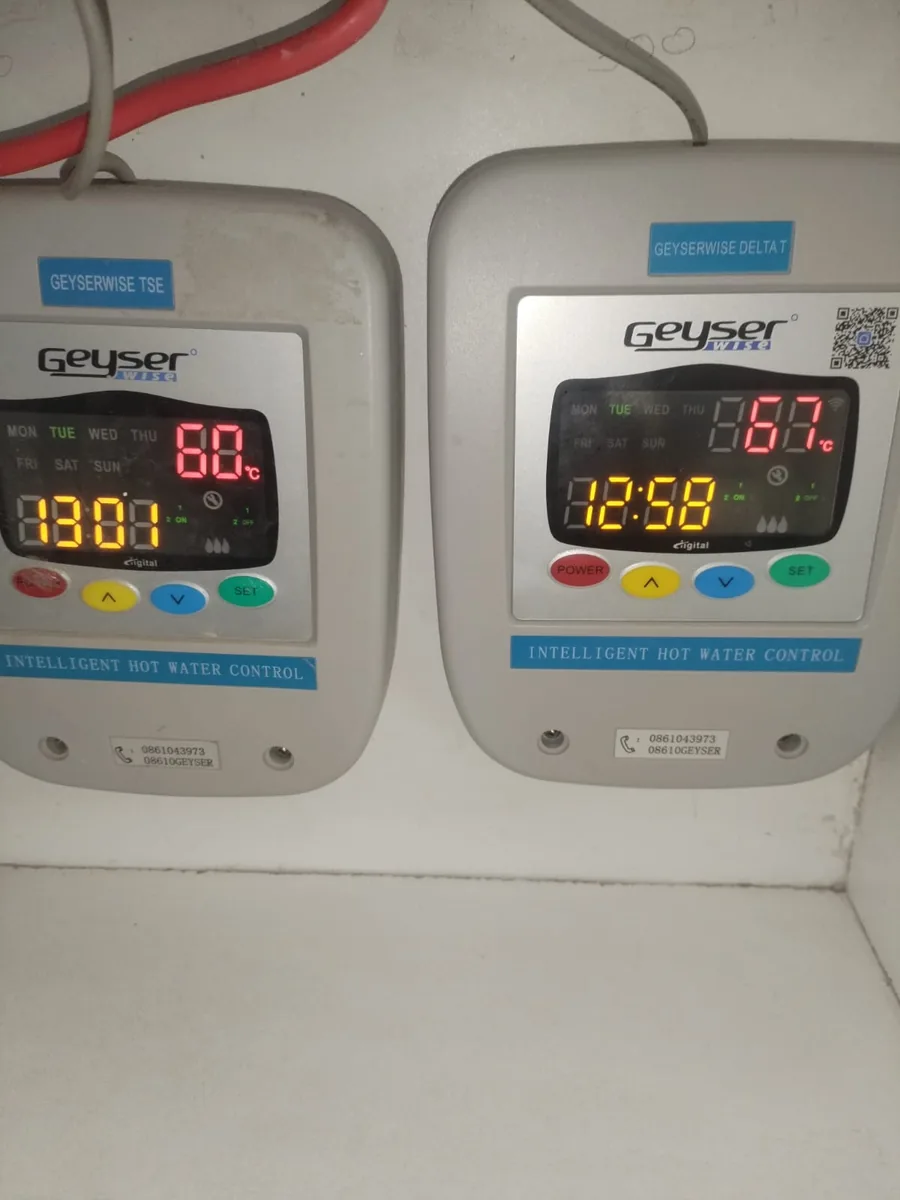
When circulation stops, a solar collector can reach extreme temperatures. Stagnation can stress valves, insulation, joints and pipework. A solar repair should check high-temperature air release valves, solar-rated safety components, pump operation and whether overheating is causing repeated valve discharge.
Service value: Managing high-temperature risk protects the roof system, reduces repeat overflow complaints and helps prevent component failure during hot weather.
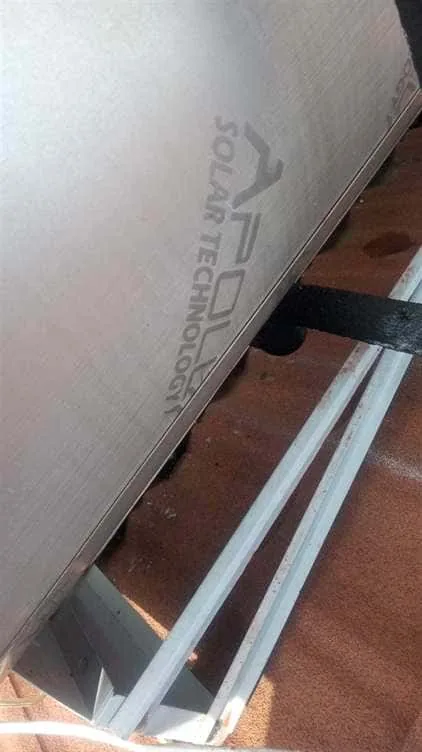
Solar geysers and collectors add load to the roof. During a repair, visible brackets, pipe supports, roof penetrations, flashing areas and drip paths should be checked for movement or storm damage. The aim is to separate a plumbing leak from a roofing leak before the wrong repair is approved.
Service value: This protects ceilings, trusses, tiles and future insurance discussions, especially where a 200L to 300L system sits above occupied rooms.
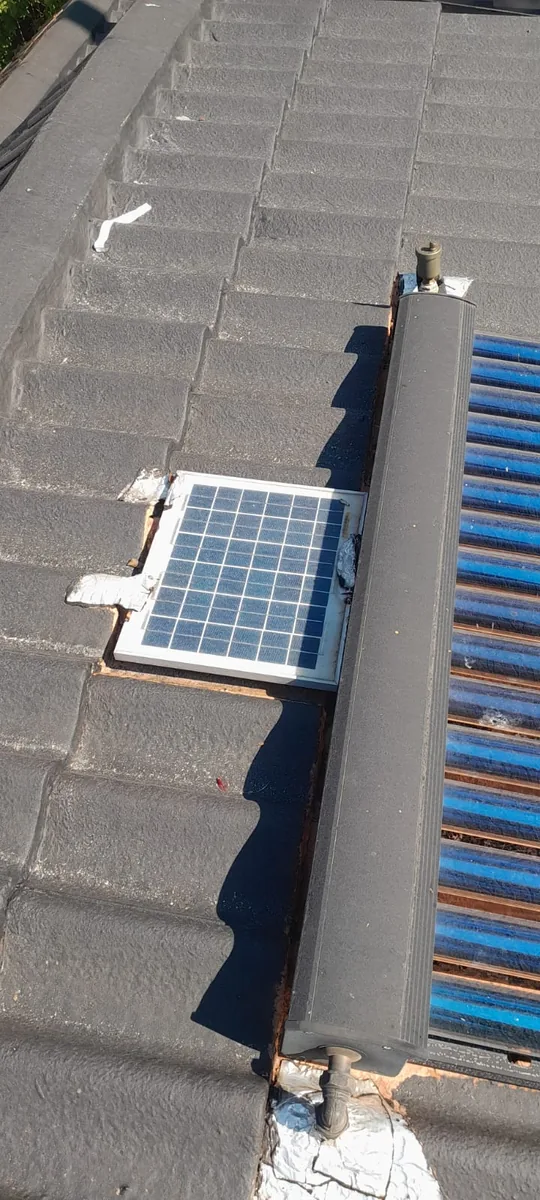
After a solar repair, the customer should know what was tested, what was changed and what should be monitored. We explain whether the issue was plumbing-side, electrical-side, pressure-side, roof-side or a combination, then note whether future maintenance, anode inspection, glycol service or replacement planning is sensible.
Service value: Clear records help homeowners, landlords, insurers and future technicians understand the system instead of starting from zero on the next fault.
Solar owner technical manual
A solar geyser is a private hot-water asset, not just a cylinder on the roof. The best repair checks the parts that customers cannot easily see: glycol strength, pump circulation, sensor readings, controller logic, anode condition, valve rating, roof support and compliance records. This is the difference between a quick leak fix and a system that keeps working safely after the technician leaves.
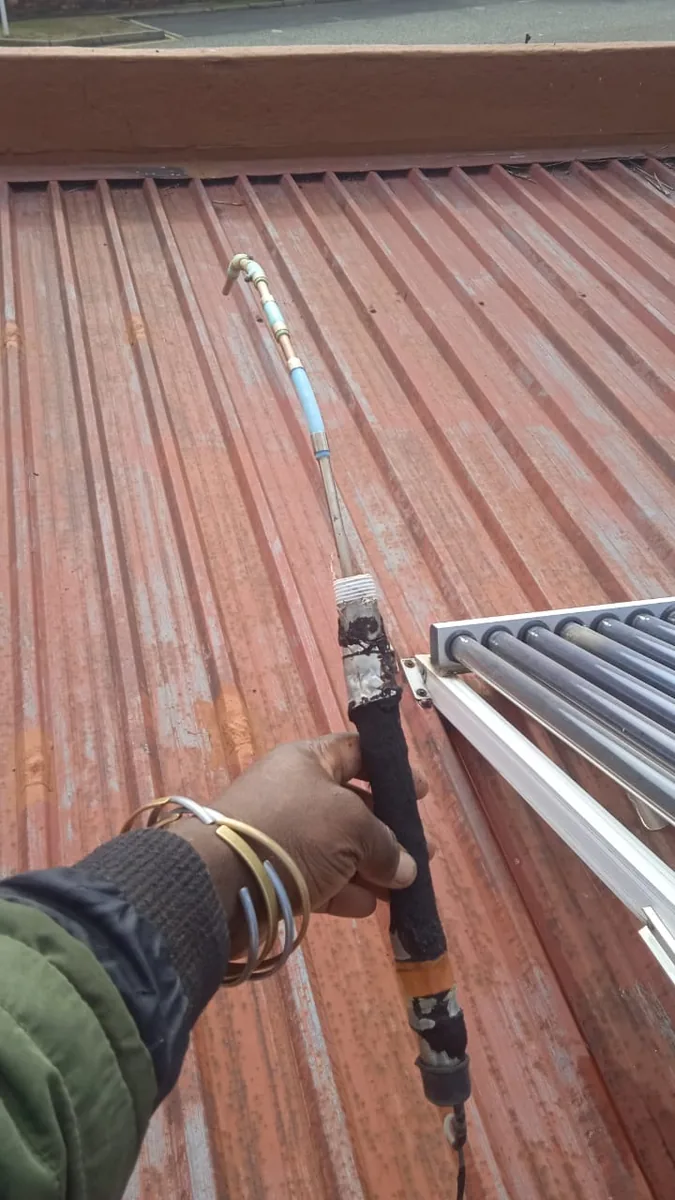
Indirect or closed-loop solar geysers rely on heat-transfer fluid to move solar heat from the collectors to the cylinder. Propylene glycol mixtures can weaken, become contaminated or lose freeze and corrosion protection over time. A proper service should include a check of the fluid condition and, where suitable, refractometer testing to understand whether the mixture is still doing its job.
What to look for: Poor solar gain, pump noise, air in the loop, winter performance problems, repeated controller errors, visible fluid loss or a system that depends too much on electric backup.
Repair path: Check loop pressure, inspect for leaks, bleed air where appropriate, test fluid condition and advise whether a top-up, partial refresh or full glycol replacement is the safer long-term option. Many systems need a glycol review every 3 to 5 years, while older or stressed systems may need attention sooner.
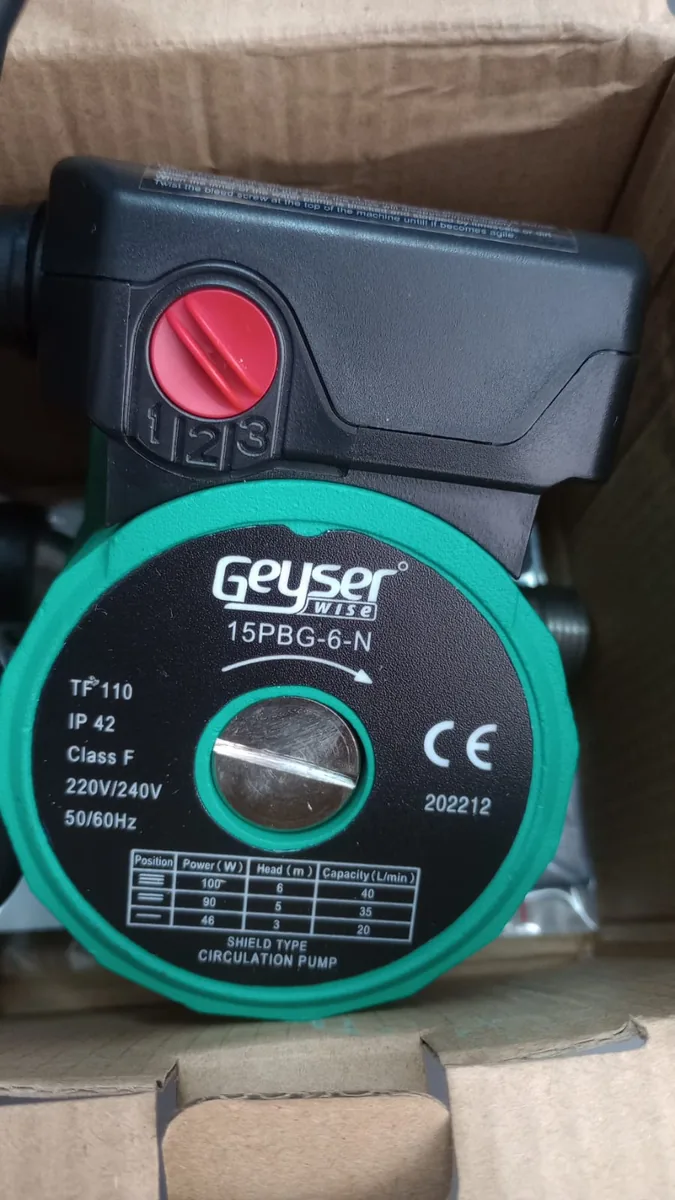
Pumped solar systems depend on circulation. When the pump seizes, runs dry, loses prime or traps air in the loop, the roof collector can be hot while the cylinder stays cold. This is why some “no hot water” faults are actually pump-station or airlock problems rather than failed cylinders.
What to look for: Controller call-for-heat with no circulation sound, pump humming, hot collector pipe on one side only, cold return pipe, or good sunlight with poor cylinder recovery.
Repair path: Confirm safe power isolation, check pump operation, sensor readings, wiring condition, non-return behaviour and air release points before replacing expensive parts.
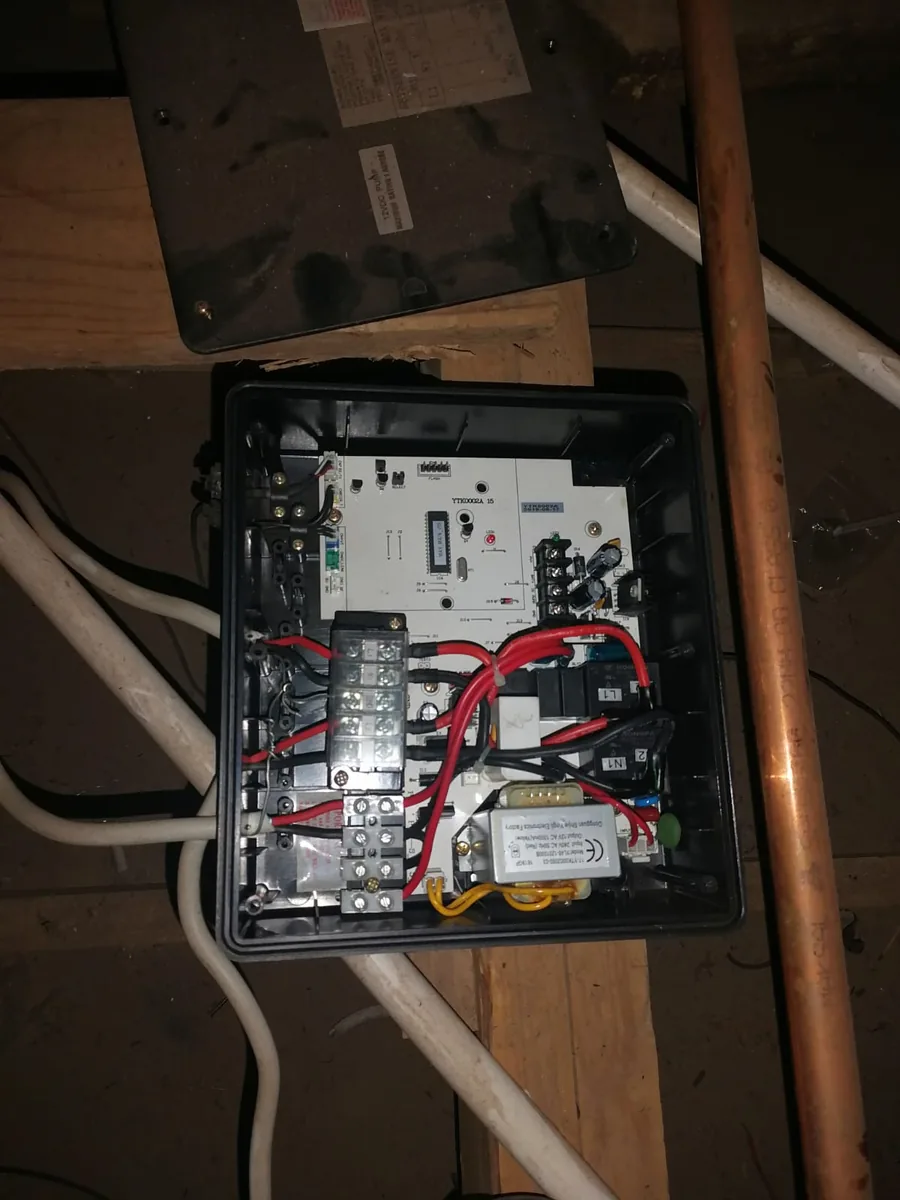
Many solar geyser failures start at the controller, sensor or backup logic. A Geyserwise-type controller may show codes such as E1, E3, E4, E6 or E9 depending on the model and setup. These codes are useful clues, but they are not a full diagnosis on their own.
What to look for: E1-style earth leakage or element concern, E3-style sensor fault, E4-style heating or pressure-related warning, E6-style circulation concern, E9-style pump or system fault, or temperature readings that do not match the actual hot-water behaviour.
Repair path: Compare the displayed code with live system symptoms, test sensors, check pump movement, inspect element backup and review differential temperature settings so the system does not waste electricity or overheat unnecessarily.
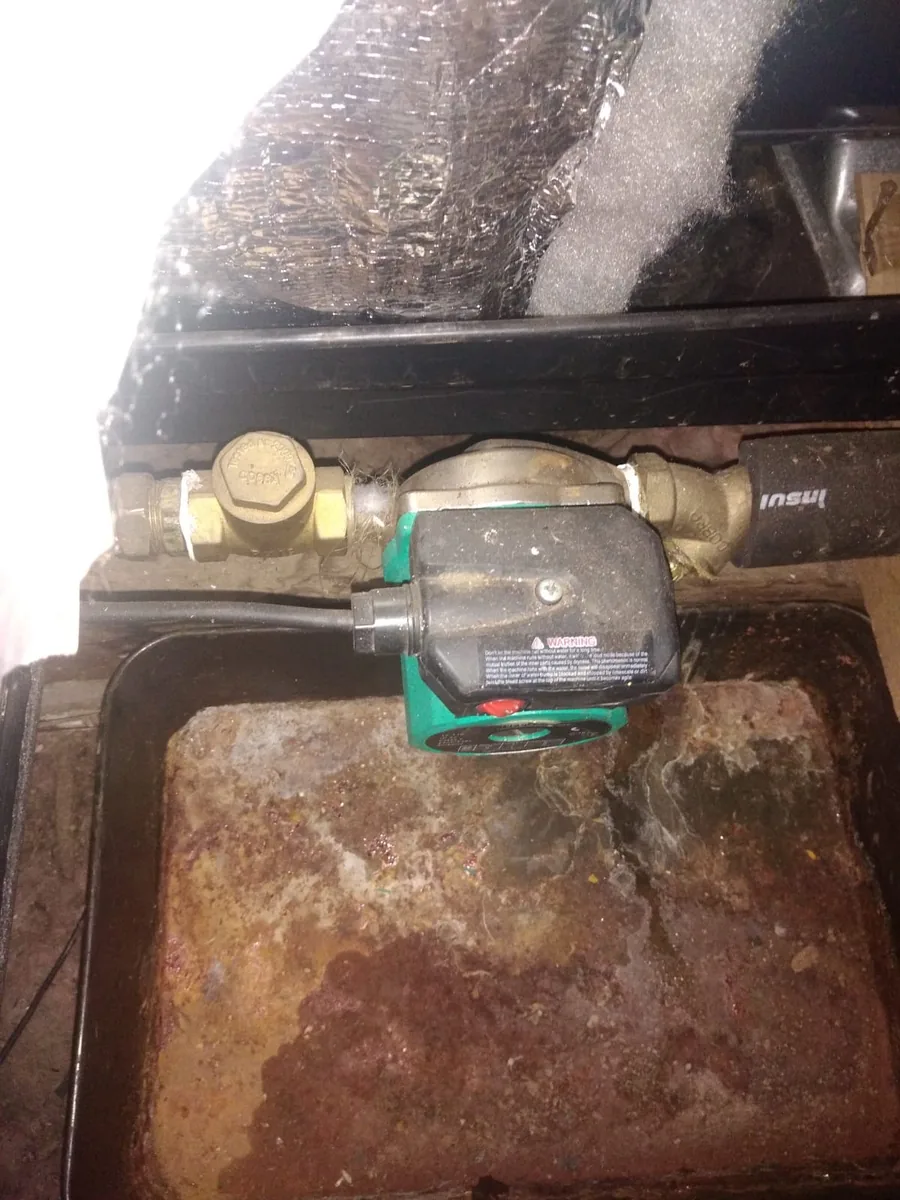
Solar collectors can reach severe temperatures when heat is not moved away properly. Stagnation can happen when a pump fails, air blocks circulation, glycol is poor, the cylinder is already hot or controller settings are wrong. Solar-rated valves and high-temperature release components matter because ordinary components may not last in this environment.
What to look for: Overflow after very hot days, boiling or knocking noises, repeated valve failure, damaged insulation, brittle pipe lagging, controller over-temperature warnings or hot roof pipes with poor indoor hot-water recovery.
Repair path: Check circulation, controller logic, high-temperature air release points, solar-rated safety valves, insulation and pressure control before approving repeat valve replacement.
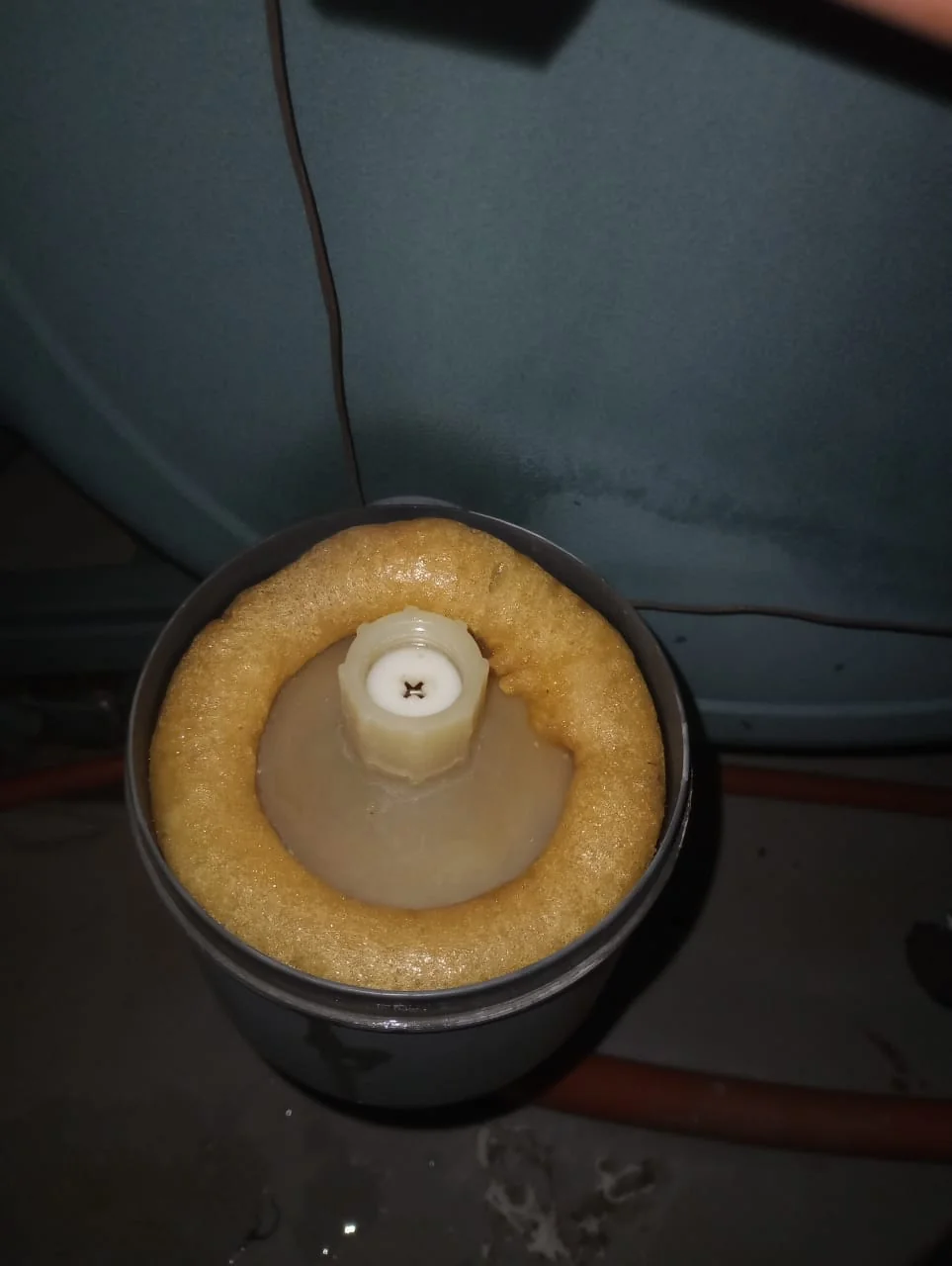
Solar tanks are expensive, and the sacrificial anode is one of the key protections against internal corrosion. If the anode is depleted, the cylinder body can start corroding instead. That can lead to rust-stained hot water, premature cylinder failure and warranty disputes where maintenance records are missing.
What to look for: Older cylinder age, rusty discharge, hard-water area, metallic smell, repeated valve discharge, or a tank that has never had its anode checked.
Repair path: Inspect the anode where the tank design and access allow. Many tanks benefit from anode checks every 2 to 3 years, and hard-water sites may need more frequent inspection.
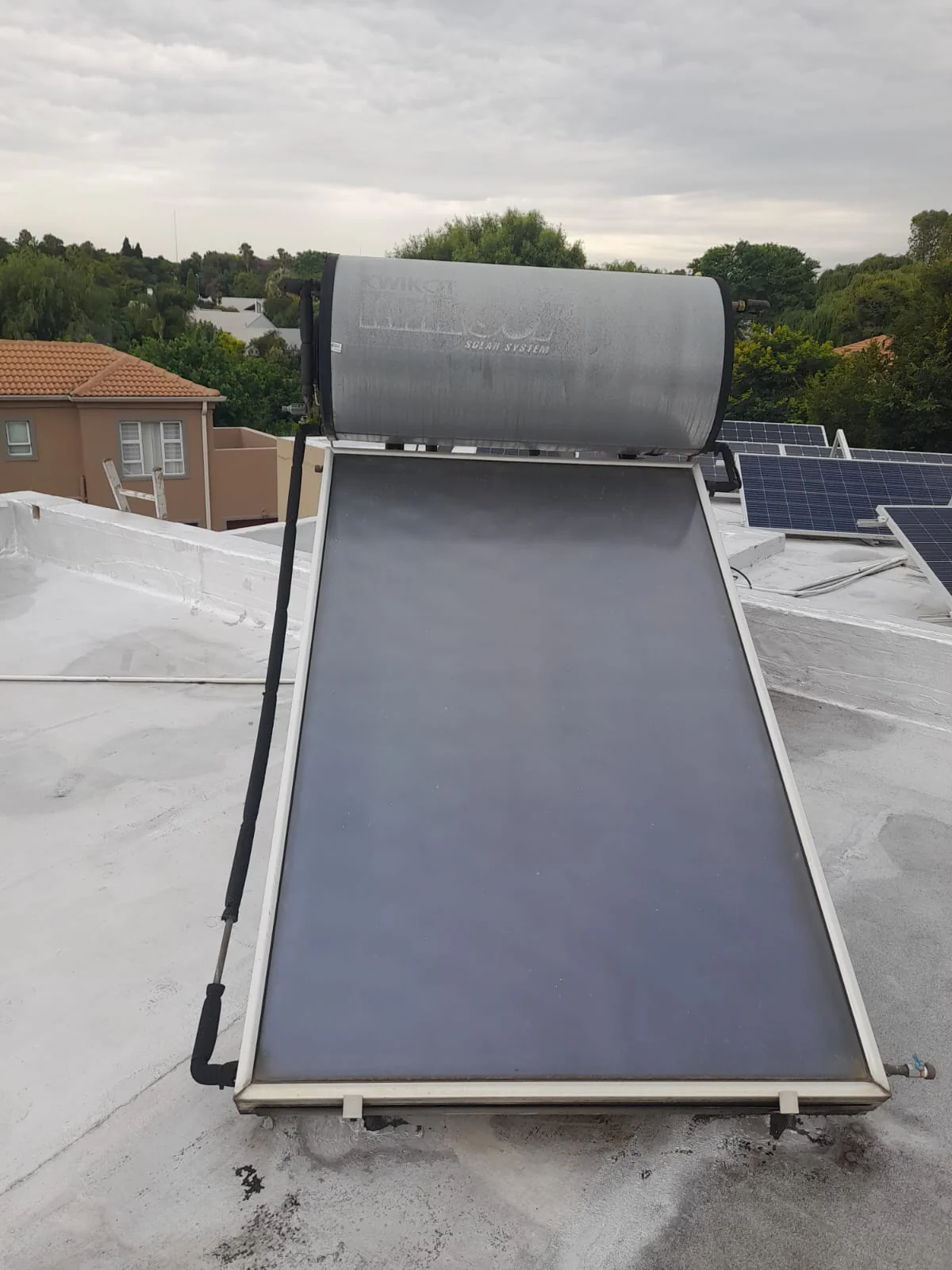
A solar geyser should be serviced like a system, not treated only when it leaks. A yearly efficiency audit helps identify weak glycol, worn valves, tired anodes, poor insulation, controller setting problems, pump strain, unsafe brackets and drip-tray or overflow concerns before they become expensive emergencies.
What to look for: Higher electricity use, hot water that runs out sooner, unexplained overflow, loose roof pipework, noisy pump operation, controller errors or repeated pressure complaints.
Repair path: Record the system type, inspect visible roof and cylinder components, test the hot-water symptom, review control settings and give the owner a clear maintenance plan with CoC guidance where regulated work applies.
Recent real solar repair examples
These examples keep the page practical without exposing private customer details. The aim is to show the kind of fault-finding sequence a real solar hot-water repair needs.
Where the cylinder design allows access, anode condition is checked as part of tank-life planning. A worn anode can point to corrosion risk and helps guide whether maintenance or replacement planning is more sensible.
The roof-side inspection checks visible collector condition, pipe support, insulation, leaks, valve behaviour and whether the system is transferring heat as expected.
When the controller shows unusual temperatures or the system relies too much on backup heating, the pump, sensors, wiring, differential settings and circulation path need to be checked together.
Safety and compliance minded repair
Our repair sequence is built for real homes, real roof systems and real water damage risk. We first protect the property, then trace the fault through the cylinder, collector, valves, controller, pump and pipework before recommending the repair. After the work, we test the system and explain what was done in plain language.
For active leaks, the first step is to reduce water damage and avoid unsafe electrical areas. Do not climb onto the roof unless it is safe and appropriate.
The fault may sit at the cylinder, roof collector, valve set, controller, pump, electrical backup or pipe connection. The system should be checked in sequence.
The repair may involve a valve, joint, controller, sensor, pump, pipe section, insulation or replacement decision. The goal is to correct the reason for the fault.
After the repair, the system should be checked for leaks, flow, heating behaviour and visible discharge. The customer should know what was repaired and what to watch.
Related services
Choose the service path that best matches the symptom if the solar issue is part of a wider geyser, pressure, leak or installation problem.
Team members and job handling
A good solar geyser repair needs the right questions before arrival and the right checks on site. The team approach is simple: confirm the symptom, protect the property, diagnose the full system and leave the customer with a clear explanation.
Helps gather the first details: suburb, urgency, leak location, controller display, roof access notes and photos where safe.
Checks isolation, pressure control, safety valves, pipework, drip tray discharge, cylinder condition and visible roof-side plumbing.
Looks at the collector circuit, pump behaviour, controller readings, sensor clues, heat-transfer loop and system performance.
Explains what was repaired, what was tested, what should be watched and whether maintenance or replacement planning is recommended.
Solar Geyser Repairs FAQ
These answers explain SANS 10106, SANS 10254, PIRB CoC paths, glycol, anodes, controllers, pumps, valves and roof-side faults before you request help.
SANS 10106 is the solar water-heating standard used to guide installation, maintenance, repair and replacement principles for domestic solar hot-water systems. It matters because a solar geyser repair must consider the collector circuit, roof-side pipework, heat-transfer method, supports, valves and system controls, not only the storage cylinder.
The temperature and pressure valve is a safety component. On a solar geyser, heat and pressure can rise quickly, so the discharge should be routed to a safe, visible exterior point where a homeowner can notice abnormal water release before hidden damage builds up.
Closed-loop systems use propylene glycol or another heat-transfer fluid in the collector loop. Refractometer testing helps check whether the mixture still has useful frost and boil protection. Weak or degraded fluid can reduce efficiency and increase the risk of circulation, freezing or overheating problems.
An E6-style circulation fault often points to a pump problem, trapped air, a blocked solar loop, a sensor fault or poor flow between the collector and the tank. It does not automatically mean the entire solar geyser must be replaced.
The sacrificial anode helps protect the inside of the tank from corrosion where the tank design allows it. Regular inspection, often around 18 to 24 months depending on water quality and access, can help reduce the risk of internal corrosion and premature cylinder failure.
Where the work is regulated and qualifies for certification, a PIRB Certificate of Compliance path should be followed. This gives the property owner better records for insurance, future sale questions and proof that the repair or replacement was not handled casually.
Call when the solar geyser leaks, the overflow runs continuously, hot water is inconsistent, the controller shows a fault, the pump is noisy, roof pipework is dripping, or the system no longer heats as expected.
Solar geyser repairs, maintenance, repair decisions and replacement work are assessed against SANS 10106 for domestic solar water-heating systems and SANS 10254 for fixed electric storage water heaters where applicable. That means we look beyond the visible leak and check the safety valves, vacuum breakers, pressure control, discharge points, drainage and service access before recommending the repair path.
Where solar hot-water work qualifies as regulated plumbing work, the correct PIRB Certificate of Compliance process should be followed by a registered plumbing professional. This documentation matters for property records, insurer queries, burst-tank investigations and future fault history.
An open-loop system sends domestic water through the solar collector. A closed-loop or indirect system uses a separate heat-transfer fluid, often glycol-based, to move heat from the collector to the cylinder. Closed-loop systems need extra checks for fluid strength, loop pressure, airlocks and circulation.
Glycol or heat-transfer fluid helps move heat and can protect the solar loop from freezing and corrosion. If the mixture weakens, leaks, becomes aerated or degrades, the collector may heat up while the cylinder does not recover properly.
Many indirect systems benefit from glycol review every 3 to 5 years, depending on the fluid condition, system age, exposure and manufacturer guidance. On suitable systems, refractometer testing can help assess whether the mixture is still performing.
On many Geyserwise-type systems, an E4-style warning can point toward high-pressure, heating-loss or collector-loop stress depending on the model and setup. It should be checked with live symptoms, valve behaviour, pump operation and loop pressure before replacing expensive parts.
An E6-style fault often suggests a circulation problem such as a seized circulation pump, airlock, sensor issue, blockage or low loop pressure preventing proper flow between the collector and cylinder. The pump, sensors, wiring, isolation points and loop pressure should be checked.
E3 or E5-style warnings can point to sensor or over-temperature problems depending on the controller model. Solar systems can reach very high temperatures quickly, so repeated over-temperature warnings need careful checking of the sensor, controller settings, circulation, pressure relief and over-temperature protection.
A running overflow can point to pressure control problems, a faulty safety valve, expansion, overheating, incorrect valve layout or a component that no longer seals properly.
The sacrificial anode helps protect the cylinder from internal corrosion. When it is depleted, the tank body can start corroding instead, which may shorten the life of an expensive solar cylinder.
Many solar tanks benefit from sacrificial anode inspection around every 18 to 24 months where access and the cylinder design allow. Hard-water areas, older tanks, rusty discharge, aggressive water conditions or repeated valve staining may justify more frequent checks.
Yes. Roof leaks can come from collector connections, copper pipe joints, vacuum breakers, valves, insulation damage, storm movement or old fittings. The repair should check both the plumbing connection and the roof penetration area.
Treat it as urgent if water is entering the ceiling, running near electrics, leaking heavily from the roof or affecting the cylinder area. Shut off water and power only if safe, then call for guidance.
An annual audit can include visible valve checks, pump and controller review, glycol condition where applicable, anode discussion, insulation checks, roof bracket review, overflow routing, pressure behaviour and advice on whether repair, maintenance or replacement planning is sensible.
Yes. A solar geyser repair must consider the roof collector, circulation path, controller, pump, heat-transfer loop, valves, pressure control and safety discharge. That is why solar repairs should be assessed with SANS 10106 solar water-heating principles as well as SANS 10254 geyser safety principles where applicable.
Not necessarily. E4-style and E6-style warnings on Geyserwise-type controllers can point toward high pressure, circulation failure, airlocks, sensor faults, seized pumps or loop-pressure problems. The controller code is a clue, not a replacement decision on its own.
Where the solar hot-water work is regulated, the correct PIRB Certificate of Compliance path helps protect property records, warranty discussions and insurer questions. Solar repairs can affect roof risk, pressure control, geyser safety and water damage liability.